

A Complete (and Compassionately Honest) Digital Marketing Guide, for Modern Entrepreneurs
If you’ve been online longer than 7 minutes, you’ve probably run into “marketing advice” like:
“Just post every day.”
“Use this magic hashtag spell.”
“Dance in Reels — the algorithm loves it!”
My dear… no.
That’s not digital marketing. That’s digital improv.
Digital marketing is not meant to overwhelm you. It’s meant to support you.
So this article will not give you shallow definitions. It won’t romanticize content creation. And it definitely won’t sell you dreams of overnight viral fame.
Instead, it will teach you:
- what marketing really is at its core,
- how digital changed everything,
- why your customers behave the way they do,
- how strategy replaces chaos,
- what truly drives growth today, and
- how to build a system that generates consistent revenue (not random spikes).
Let’s start with the truth most people miss:
Digital marketing is simply marketing, done through digital channels.
The principles are timeless. The platforms are not.
Once you understand the principles, the overwhelm disappears.
Let’s go deep.
1. Marketing Has One Job: Creating and Keeping Customers
Before “digital,” before “content,” before “Reels vs. TikTok,” we had the original definition of marketing by Peter Drucker:
“The aim of marketing is to know and understand the customer so well the product fits them and sells itself.”
Digital marketing is the same, but delivered online, at scale, with more visibility and less human interaction upfront.
At its essence, digital marketing is:
- understanding people,
- designing a valuable offer,
- communicating that value to the right audience, and
- building a journey that leads them toward a confident yes.
The internet didn’t change the psychology.
It simply changed the delivery systems.
2. The Evolution: From Traditional Marketing to Digital Marketing
Understanding digital marketing requires understanding the shift that created it.
Traditional Marketing (Before 2000)
Mass messaging → billboards, brochures, newspaper ads.
Audience passive.
Brands in control.
Feedback slow or nonexistent.
Early Digital Marketing (2000–2010)
Websites, blogs, SEO, early email newsletters.
Audience begins searching for information.
Brand authority becomes measurable.
Social Media Era (2010–2020)
Facebook, Instagram, YouTube.
The audience becomes active, opinionated, expressive.
Brands learn they must “show up,” not just advertise.
Experience Era (2020–Present)
Short-form video (TikTok, Reels), personalization, AI, micro-communities.
Customers expect conversational brands, real humans, and proof.
Relationships matter more than reach.
Attention spans aren’t shorter — they’re smarter.
Which brings us to today’s reality:
Digital marketing is no longer optional.
It is the primary environment where buying decisions are made.
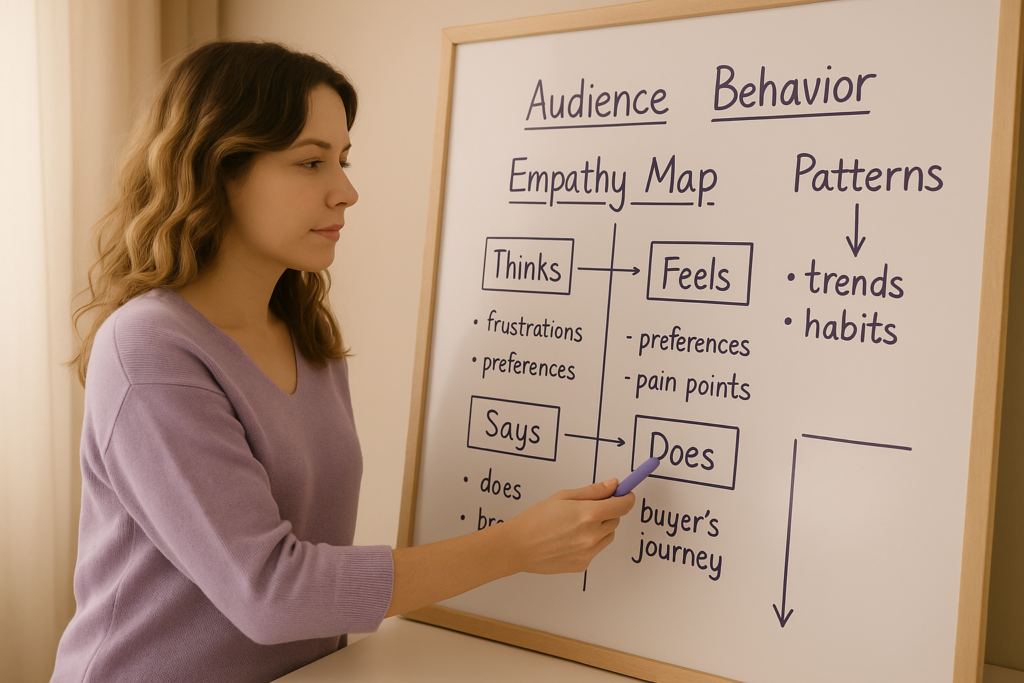
3. The Core Question: What Is Digital Marketing Really?
Let’s define it properly.
Digital marketing is:
The strategic use of online channels to attract, educate, nurture, convert, and retain customers through a structured journey — using psychology, storytelling, and data.
It is not content posting.
It is not creativity theatre.
It is not algorithm worship.
It is an ecosystem.
A system built on:
- human behavior
- value communication
- positioning
- frameworks
- strategy
- content
- channels
- measurement
- feedback loops
If this sounds complex, don’t worry — it becomes simple once you see its structure.
4. The Strategic Foundation of Digital Marketing
(SOSTAC®, STP, and Why Structure Matters More Than Anything)
A strong digital strategy follows the SOSTAC® Planning Framework, widely taught in universities and used by leading global brands:
- Situation
- Objectives
- Strategy
- Tactics
- Action
- Control
Let’s go through each step gently and thoroughly.
4.1 Situation: Understanding Your Landscape
Before you create content, run ads, or post a single Reel, you must understand:
- Where your business stands
- Where your market is going
- What your competitors are doing
- What your audience actually wants
- What makes you different
This is where the STP Framework enters the story.
STP = Segmentation → Targeting → Positioning
Segmentation:
Group the market into meaningful clusters (demographics, psychographics, behavior).
Targeting:
Pick one — the one that benefits most from your solution.
Positioning:
Decide what you want to stand for in their mind.
This is the moment your brand stops sounding like “someone who helps everyone” and starts sounding like “the exact person I need.”
This stage also includes your:
- Buyer Persona
- Competitor Analysis
- Value Proposition
- Brand Messaging
- Content DNA (your tone, style, point of view)
This is the soil your marketing roots itself in.
4.2 Objectives: What Are We Trying to Achieve?
Digital marketing without goals is just content.
Digital marketing with SMART goals is a business growth engine.
SMART goals mean:
- Specific
- Measurable
- Achievable
- Relevant
- Time-bound
Your goal might be:
- lead generation
- bookings
- revenue growth
- product sales
- brand authority
Without defining it, your marketing can’t succeed — because it doesn’t know what “success” is supposed to look like.
4.3 Strategy: The Emotional + Logical Map that Guides Everything
Here is where your digital marketing comes alive.
Your strategy defines:
- the buyer journey
- your content pillars
- your positioning narrative
- the emotions you trigger at each stage
- your channel selection
- your funnel structure
And it follows two key frameworks:
A. Customer Journey Framework
Every buyer — regardless of niche — moves through predictable psychological stages:
- Awareness (I have a symptom.)
- Problem Awareness (Ah — this is the root cause.)
- Consideration (What solutions exist?)
- Conversion (Is this right for me?)
- Repurchase (How do I deepen the relationship?)
Your content must match their level of awareness — otherwise you overwhelm them or bore them.
B. Content Funnel Framework
A strategic content ecosystem includes:
Stage 1: Attraction
To get the right people in the room.
Stage 2: Connection
To build trust and recognition.
Stage 3: Engagement
To deepen interest and turn attention into leads.
Stage 4: Conversion
To transform leads into customers.
Your brand already uses this funnel setup — and it is one of the most powerful structures in modern marketing.
Together, the Customer Journey + Content Funnel create the backbone of your strategy.
4.4 Tactics: Where Most People Start (And Why They Struggle)
Tactics are:
- YouTube
- TikTok
- Ads
- Landing pages
- SEO
- Website
- Google Business Profile
Most business owners start here, which is why they experience frustration.
Tactics are delivery tools, not strategy.
Posting content without strategy is like:
- decorating a house you haven’t built yet
- cooking without a recipe
- training for a marathon without knowing the distance
Tactics work beautifully when they serve the strategy.
4.5 Action: Execution, Workflow, Systems
Digital marketing collapses without:
- workflow
- batching
- templates
- SOPs
- automation
- editorial calendars
- repurposing systems
This is where efficiency is built.
This is why entrepreneurs burn out.
Without systemization, marketing feels like a second job — not a business asset.
4.6 Control: Analytics, Insights & Optimization
The final stage is where digital marketing becomes intelligent.
You measure:
- reach
- impressions
- engagement
- website traffic
- conversion rates
- lead source quality
- qualified revenue
- customer retention
Marketing stops being a guess.
It becomes a process of continuous improvement.

5. The Psychology Behind Digital Marketing (The Real Secret)
You can’t understand digital marketing without understanding human behavior.
Here are some core principles that matter the most:
● Jobs to Be Done (JTBD)
People don’t buy products.
They hire solutions to achieve transformation.
Example:
“No one hires a fitness coach. They hire a sense of control over their body.”
Digital marketing must speak to the job — not the product.
● Diffusion of Innovation (Everett Rogers)
Your audience includes:
- Innovators
- Early adopters
- Early majority
- Late majority
- Laggards
Your messaging must evolve as your market matures.
● The Kano Model
Customers classify value as:
- Basic expectations
- Performance features
- Delight factors
Your content strategy should include all three.
● Cognitive Load Theory
If your content is too heavy, complex, or dense, people leave.
Digital marketing must simplify — not dilute — complexity.
Your tone of voice already reflects this (“cloud-light creativity backed by solid strategy”).

6. The Channels of Digital Marketing (Explained With the Human Lens)
Digital channels are not “platforms.”
They are psychological environments with specific roles:
- Instagram → social proof, connection, brand identity
- TikTok → discoverability, culture, personality
- YouTube → authority, long-term SEO, education
- Pinterest → search-driven inspiration
- LinkedIn → thought leadership, B2B positioning
- Email → intimacy, conversion, retention
- Google → intent-driven decision support
- Website → trust, control, brand home
Choosing a channel is choosing a behavior pattern, not a feature.
7. The Business Impact: Why Digital Marketing Matters
Digital marketing:
- reduces customer acquisition costs
- speeds up the sales cycle
- increases lead quality
- builds authority
- creates compounding results
- stabilizes revenue
- decreases dependence on ads
- future-proofs the business
- supports scalability
Most importantly:
Digital marketing takes your expertise, your value, and makes it visible, accessible, and irresistible at scale.
So… What Is Digital Marketing, in One Final, Beautiful Sentence?
Digital marketing is:
The structured, strategic, emotionally intelligent process of guiding the right people through the right journey, using intentional content on chosen digital channels, supported by data, psychology, and brand identity to generate sustainable business growth.
This is the truth behind the noise.
This is the craft behind the chaos.
This is the clarity beneath the content.
And now you understand it not as a tactic, but as a discipline.
GET IN TOUCH







Leave A Comment